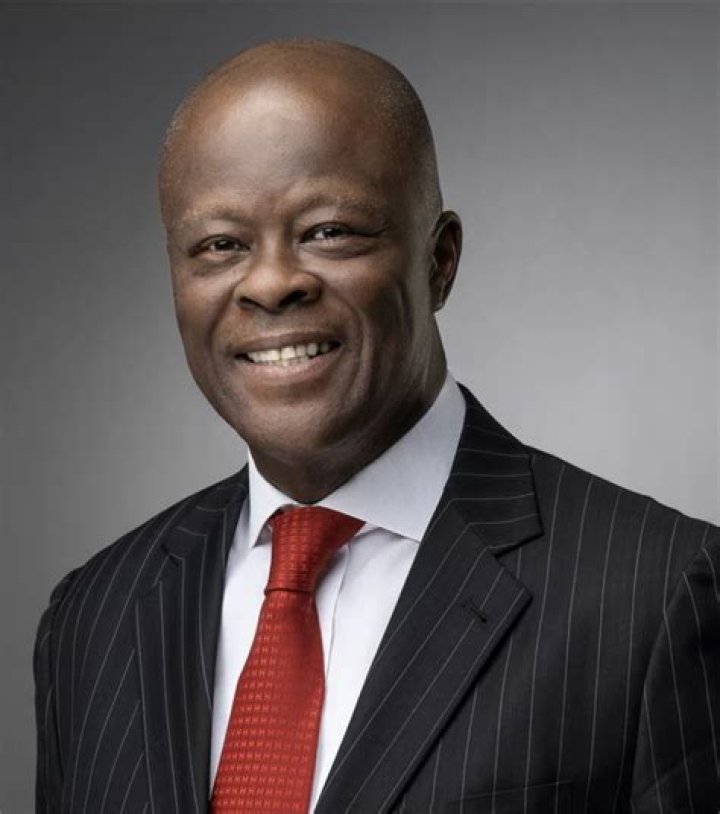
Isaac Chotiner Biography
Isaac Chotiner is an American journalist Reporting at The New Republic based in Washington D.C. Metro Area. He is a staff writer at Slate Magazine.
He began his career as the senior editor at The New Republic. He also worked at Bloggingheads.tv as an editorial assistant, and interned at The Washington Monthly. He has written reviews and articles for The Times Literary Supplement, The New York Times and The Washington Post.
Isaac Chotiner Education | Isaac Chotiner College
He studied and graduated with a Bachelor’s degree in political science from the University of California, Davis. After graduating from the University of California, Davis, Chotiner worked at The Washington Monthly before joining The New Republic, in 2006, as a reporter-researcher.
Isaac Chotiner New Yorker
Isaac Chotiner is a staff writer and the principal contributor to Q. & A. at The New Yorker, a series of timely interviews with major public figures in politics, books, media, business, technology, and more. He has written for The New Yorker, the Times, The Atlantic, the Times Literary Supplement, the Washington Post, and The Wall Street Journal.
Isaac Chotiner Age
He has not revealed his time of birth, he even doesn’t celebrate his birthdays on the limelight.
Isaac Chotiner Wife
It is not known whether he is married or not, we will let you know when he will decide to open up.
Isaac Chotiner Family
There is no information about his family and has not shared any information about his parents and with their occupation, he has also not shared any information him having siblings or elder brothers and sisters
Isaac Chotiner Bret Easton Ellis
The novelist, whose first book of nonfiction, “White,” is an interlocking set of essays about America, talks about Trump, Roseanne Barr, and giving everyone the benefit of the doubt.
Isaac Chotiner Twitter
Tweets by IChotiner
Isaac Chotiner Interview
Why Did the New York Review of Books Publish That Jian Ghomeshi Essay?
Updated: September 14, 2018
Now, Ghomeshi has published a long essay in the New York Review of Books, titled “Reflections From a Hashtag.” In it, Ghomeshi aims to “inject nuance” into his story and says he has faced “enough humiliation for a lifetime” as a victim of “mass shaming.” He also claims to have learned some lessons that have made him a better man: “I have spent these years trying to listen, read, and reflect,” he writes, adding that he now understands that he could be too demanding on dates. Still, he denies the vast majority of the accusations. The piece is promoted on the cover as part of a package on “The Fall of Men” and lands on the same week that Harper’s published a long first-person essay by John Hockenberry, who last year was accused of harassing several female colleagues at WNYC.
I recently spoke by phone with Ian Buruma, the editor of the New York Review of Books, about the decision to publish the Ghomeshi piece, which has already proven controversial. (Full disclosure: I have met Buruma several times, and he offered me a job last year after he took over the NYRB.) During the course of our conversation, which has been edited and condensed for clarity, we discussed the genesis of the piece, the ethics of publishing people who do bad deeds, and why the specific nature of Ghomeshi’s behavior is not really Buruma’s “concern.”
Isaac Chotiner: How did this piece come about?
Ian Buruma: I met, through another editor, many months ago, Jian Ghomeshi, whom I hadn’t met before and who told me his story and said that he was interested in writing about it. I was interested in the subject, which as we discussed then, the first time I saw him, was what it was like to be, as it were, at the top of the world, doing more or less what you like, being a jerk in many ways, and then finding your life ruined and being a public villain and pilloried. This seemed like a story that was worth hearing—not necessarily as a defense of what he may have done. But it is an angle on an issue that is clearly very important and that I felt had not been exposed very much.
Was it at a social occasion that you met?
No, no, it was a coffee to discuss the prospect of writing.
The editor had … I don’t know how he knew Ghomeshi. I have no idea. But the three of us had coffee and his story was discussed and he expressed an interest in writing about it. And I said I find it an interesting story, so I will read whatever you come up with. [Note: When I called Buruma back to ask whether the other editor worked at a different publication—as I had perhaps wrongly assumed from his first answer—he did not answer, telling me, “It’s irrelevant. It’s neither here nor there.”]
Were there in-house objections to the piece?
No. We had a proper office discussion and everybody expressed their views and not everybody agreed. But all views were aired and in the end, when the decision was made, the office stuck together.
Was there a gender breakdown during the discussion?
I would say not necessarily just in this particular case. I would say that on issues to do with #MeToo and relations between men and women and so on, there isn’t so much a gender breakdown as there is a generational one. I think that is generally true. I don’t think our office is in any way unusual. I think people over 40 and under 40 often have disagreements about this.
How old are you?
I’m 66.
Are you then on the predictable side of that divide, given what you said?
I wouldn’t want to categorize myself quite so starkly. Like everybody who thinks about these issues, I have ambivalent feelings about it. I have absolutely no doubt that the #MeToo movement is a necessary corrective on male behavior that stands in the way of being able to work on equal terms with women. In that sense, I think it’s an entirely good thing. But like all well-intentioned and good things, there can be undesirable consequences. I think, in a general climate of denunciation, sometimes things happen and people express views that can be disturbing. I wouldn’t say that I have an unequivocal view of it.
Do you think what happened to Ghomeshi is an “undesirable consequence?”
I think it has undesirable, or at least unresolved, aspects to it. I think nobody has quite figured out what should happen in cases like his, where you have been legally acquitted but you are still judged as undesirable in public opinion, and how far that should go, how long that should last, and whether people should make a comeback or can make a comeback at all—there are no hard and fast rules. That’s an issue we should be thinking about.
But—
Hang on. Hang on. The reason I was interested in publishing it is precisely to help people think this sort of thing through. I am not talking about people who broke the law. I am not talking about rapists. I am talking about people who behaved badly sexually, abusing their power in one way or another, and then the question is how should that be sanctioned. Something like rape is a crime, and we know what happens in the case of crimes. There are trials and if you are held to be guilty or convicted and so on, there are rules about that. What is much murkier is when people are not found to have broken the law but have misbehaved in other ways nonetheless. How do you deal with such cases? Should that last forever?
Source: slate.com